
Activated Carbon Injection Systems for Hg Removal
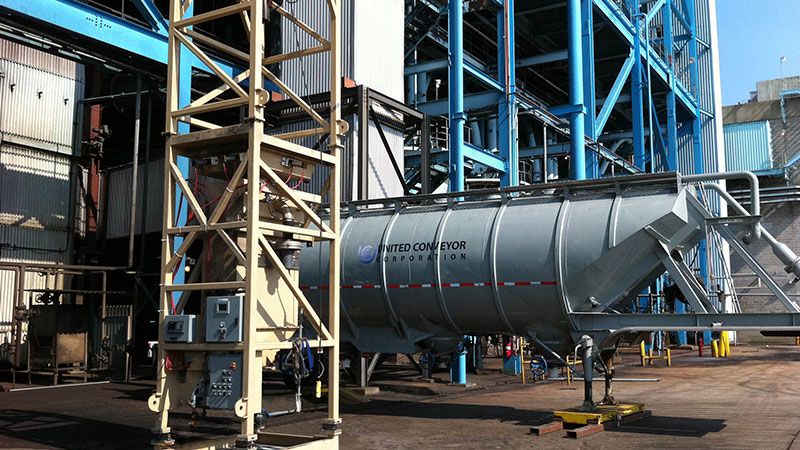
UCC’s Activated Carbon Injection (ACI) system, the M-PACT™ is a compact, modular unit designed by Albemarle to provide cost-effective PAC (powder activation carbon) utilization. Its stand-alone design is equipped with on-board PAC storage that incorporates both the metering and conveyance operations of ACI into a skid configuration.
How Does M-PACT Work?
A six door configuration allows for easy and safe access to its equipment and instrumentation. The M-PACT is programmed to receive sorbent in a number of ways including gravity feed from local silos, bulk bags or pneumatically from remote tanks or silos. Its small footprint allows for installation on existing slabs or platforms and in areas where headroom is restricted.
Regulation Update Announcement
The Environmental Protection Agency (EPA) oversees the Mercury and Air Toxics Standards (MATS) as part of the Clean Air Act, aimed at limiting hazardous air pollutants, particularly mercury, emitted by power plants. Recently, the EPA strengthened the MATS rule, focusing on reducing mercury emissions from existing lignite-fired power plants. The updated regulation requires these plants to meet stricter mercury emission limits, set at 1.2lb/TBtu, down from the previous 4.0lb/TBtu. Affected facilities are given a three-year grace period from the effective date to achieve compliance with the revised standards.
Performance Specs
The M-PACT™ can be used alone or in conjunction with storage silos for activated carbon injection applications. Its storage bin holds nominally 4,000 pounds of sorbent, therefore the refill requirements are low. It is equipped with either a single feed train (feeder and pneumatic conveying system) or multiple independent feed trains that can be used to provide 100% redundancy or independently to feed sorbent to different locations. The single feed train configuration is generally provided with a redundant conveyance blower.
A programmable logic controller (PLC) allows the bin to be refilled from silos, bulk trailers, and bulk-bags via gravity feed or pneumatic conveying. High-quality gravimetric feeders are used to provide unparalleled PAC metering accuracy to support precise activated carbon injection. The nominal maximum feed rate per feeder is 500 lb/hr with a 10:1 turndown ratio.
This unit is fully functional upon leaving the factory, as it is equipped with pressure transmitters on the eductors, weight decks on the feeders, feeder hopper Hi Hi Level switches, a bin level transmitter, bin level switch, bin pressure switch and automatic actuated valves for storage bin and feeder hopper refill. Field installation requires only one power feed, one plant airline and a connection to conveyance piping. The M-PACT’s standardized design and turn-key approach allows for fast delivery and installation.
Frequently Asked Questions
What is Activated Carbon Injection (ACI)?
How does UCC’s ACI system (M-PACT™) work?
What pollutants can ACI control?
Why is mercury control important for emissions compliance?
How does ACI support regulatory compliance?
How can we help?
Our team of experts are happy to help answer any questions you have about UCC’s air solutions.